
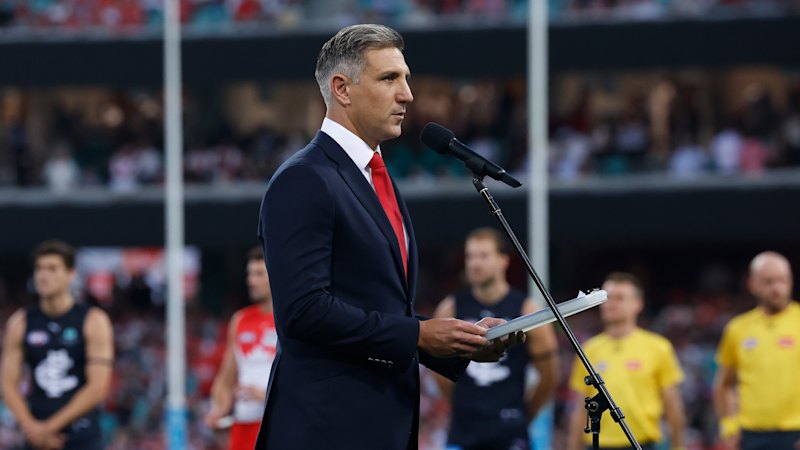
Sydney chief executive Matthew Pavlich led the tribute as both teams came together before the AFL season opener between the Swans and Carlton on March 5 at the SCG. It should have been straightforward: honouring the dead and acknowledging the courage of first responders after Australia's worst terror attack.
Instead, it has become a case study in how institutional processes can derail good intentions. References to the Jewish community were removed after being included in a previous version of the script, a fact that only emerged days later when journalist and former Swans star Gerard Healy called chairman Andrew Pridham to make him aware that the tribute neglected to specifically name the Jewish community as the target of the Bondi shootings.
The Swans have since admitted the omission. Chairman Andrew Pridham apologised for the omission, noting references were removed from the script. The club's explanation is telling: it said the script change was made "in a genuine effort to use inclusive language."
This framing matters. The Swans did not claim they were trying to downplay the attack's nature or the Jewish community's suffering. Rather, they describe a genuine if flawed attempt to broaden the ceremony's scope. Yet the effect was precisely the opposite of what they claimed to intend. In trying to be inclusive, they erased the specific identity of those who were targeted for exactly who they were.
The broader institutional question is sharper still. The Royal Commission on Antisemitism and Social Cohesion was established on 9 January 2026 in response to the Bondi terrorist attack, with former High Court judge Virginia Bell appointed as the Royal Commissioner. That commission now faces an examination of how a major public institution handling a serious national tragedy managed its decision-making process.
AFL chief executive Andrew Dillon acknowledged the nature of the attack when questioned, stating that the events of Bondi was an antisemitic attack on the Jewish community and completely at odds with Australia's way of life. Yet questions persist about who made the script change and why, particularly after Dillon told radio he did not know what had happened to the original transcript.
Not everyone views the episode as a catastrophe. Representatives of Hatzolah, the Jewish community emergency medical response organisation, were at the ground with victims and survivors. They praised the Swans' efforts, noting the club treated them like VIPs and provided kosher food, with staff described as welcoming and above and beyond expectations. That gap between the lived experience on the day and the institutional accountability required speaks to the complexity here.
From a governance perspective, the real issue is process. A major public ceremony honouring terrorism victims should have clear, documented decision-making pathways. If changes are made to a script, institutions should know why, who made the call, and on what basis. The Swans' statement that the decision was made "within our club" in pursuit of inclusive language raises obvious follow-ups: Which staff member made the change? What was the reasoning? Was there consultation, or did someone make an autonomous call in a final draft?
Accountability demands answers to those questions. The royal commission may extract them. Whether the Swans' good intentions and subsequent remorse constitute a genuine error in judgement or point to deeper cultural blind spots within Australian institutions will likely be part of that examination. Either way, the commission is required to produce a final report by 14 December 2026, and institutional scrutiny of this kind, while uncomfortable, is how trust gets rebuilt.