
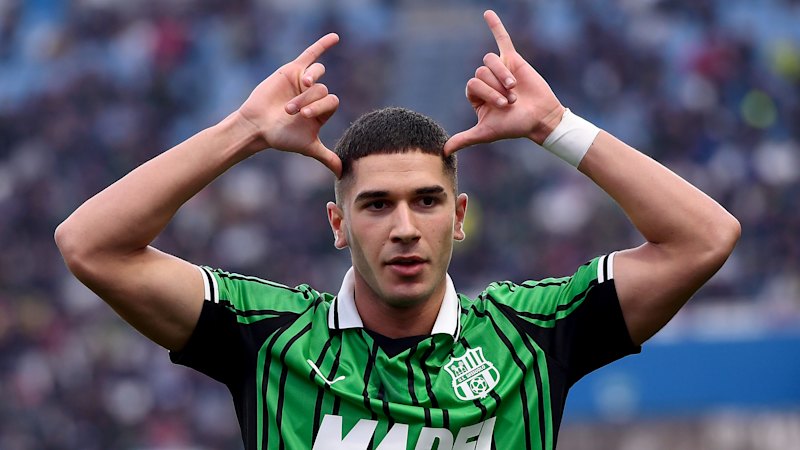
The numbers tell a specific story: Cristian Volpato has featured in exactly two matches for Sassuolo this calendar year, appearing for 12 minutes combined. Yet here is Tony Popovic, the Socceroos coach, flying to Italy in recent weeks to sit down with the 22-year-old midfielder and ask him to consider representing Australia at the World Cup.
For anyone tracking Australian football over the past four years, this reversal carries weight. In November 2022, Volpato rejected a spot in Graham Arnold's 26-man squad for Qatar, a decision that reflected his stated preference to develop within Italy's youth system. That choice created tension with Australian fans who felt a talented home-grown product was choosing allegiance to another nation.
Now the situation has shifted. Popovic has confirmed that Volpato's camp reached out to signal interest, and Popovic's response was measured. He travelled to watch Volpato in action against Hellas Verona, where the midfielder sat on the bench, then held a direct conversation about what Australia is building towards the 2026 tournament. Popovic was clear: no pressure, no ultimatums. If Volpato commits, it must be genuine.
This restraint reflects something important about Popovic's philosophy. He has made clear since taking the job last September that he will not "sell the shirt" to an uncommitted player. That distinction matters more than ever given Australia's current injury landscape, which has become genuinely problematic. Popovic has lost his first-choice right wing-back Lewis Miller to a ruptured Achilles that will sideline him for the tournament itself. Mohamed Toure, who had impressed at Norwich City, is dealing with a groin injury. Kusini Yengi at Cerezo Osaka will miss two to three months with a quad issue. Jackson Irvine, the captain and key midfielder, continues to manage a foot injury that Popovic initially thought would cost Australia his World Cup campaign.
The depth crisis opens the door. Popovic will need to be creative with his attacking options for the friendly matches against Cameroon and Curacao this month, with one assistant suggesting he might experiment by moving a wide player into the centre-forward role. He has also flagged Ante Suto, a 25-year-old Croatian-born forward with Australian passport eligibility, as a possible bolter after his performances coming off the bench at Hibernian in Scotland.
The case for Volpato, though, carries strategic logic beyond injury mitigation. He is a technically gifted attacking midfielder or winger with experience in Serie A football. Born in Camperdown in Sydney's inner-west, he came through the academies of Sydney FC and Western Sydney Wanderers before joining AS Roma in 2020. He made his senior debut under Jose Mourinho and eventually transferred to Sassuolo for EUR 7.5 million. That profile is exactly what Australia lacks heading into a World Cup.
The counter-argument is also evident. Volpato's lack of club football in 2026 creates genuine uncertainty. A player cannot simply step into a World Cup environment cold, no matter how talented. International football at that level demands sharpness and match rhythm that training cannot replicate. His equivocation over four years also suggests a divided commitment, one that Popovic explicitly wants to avoid. The coach is not interested in a player who views the Socceroos as a backup option.
What happens next depends entirely on Volpato. Popovic will name his squad in the coming week for the March friendlies, and Volpato's inclusion would signal genuine movement toward a decision. If he does play meaningful minutes in those matches and demonstrates the quality that made Roma and Australia both keen on his services, the conversation shifts. If he remains unused at Sassuolo, the Socceroos move forward without him.
The broader lesson here is instructive: international football, even at the elite level, operates within the constraints of club football. A player cannot commit to his nation if his club refuses to release him or, as in Volpato's case, does not see him as part of the immediate plans. Popovic understands this completely. That is why he made the trip to Italy in person. Sometimes the best strategic decision is to listen, observe, and let the player find his own answer.