
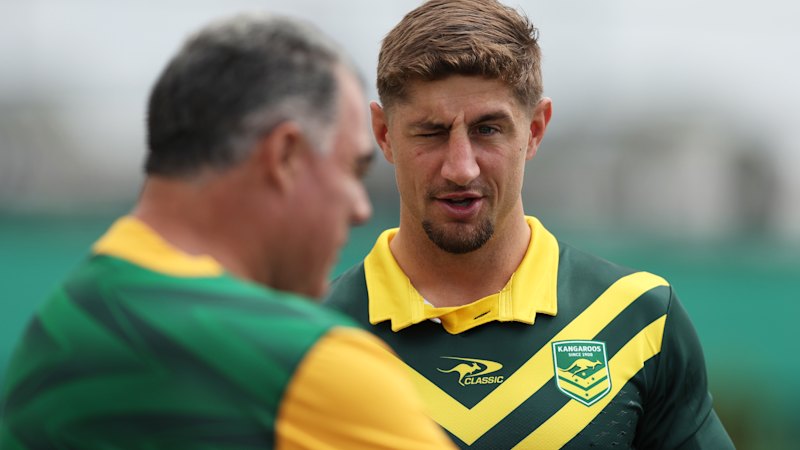
Zac Lomax should have quit while he was ahead. After weeks of legal turmoil and public scrutiny, the 26-year-old winger finally secured a path forward with Western Force on a two-year rugby union deal. Yet in announcing his move to the Perth-based Super Rugby franchise on Monday, he could not resist one final swipe.
In his statement, Lomax referenced "the dream of one day representing the Wallabies on a truly international stage." Three words. That was all it took to trigger a firestorm across rugby league.
Mal Meninga, now coach of the Perth Bears, gave Lomax his Kangaroos debut just two years ago."So it's disappointing to hear a comment like that," Meninga said. "Rugby league has given Zac every opportunity in life."
Former hardman Mark Geyer was less restrained."He's basically given the code both fingers," Geyer said, pointing to the support Lomax received from St George Illawarra, Parramatta and Melbourne. The comment stung because it carried a grain of truth.
International Rugby League chairman Troy Grant appeared equally unimpressed."Don't let the door hit you on the arse on the way out," he said, noting the irony that Lomax had lost his court case to join Melbourne just weeks earlier.
The broader context matters here.One week before securing his rugby deal, Lomax had been denied a return to the NRL when he lost his Supreme Court case against Parramatta. The Eels had contested his bid to join Melbourne, citing a restraint clause in his November 2025 release.The Supreme Court order prohibited him from entering into any contract with another NRL club until 31 October 2027 without Parramatta's written consent.The Storm were required to pay $250,000 of Parramatta's legal costs over the failed transfer bid.
This legal tangle traces back further still.In December, the R360 competition failed to launch, meaning Lomax's planned move fell through, leaving him without a club for 2026. He had signed to that Saudi-backed rugby league venture after the Eels released him in 2025, believing he had secured his future. When R360 collapsed, the path back to the NRL was blocked by the restrictive clause Lomax himself had agreed to.
Rugby Australia clearly saw opportunity in his predicament.Court documents revealed Lomax had received initial and revised Rugby Australia offers in December that fell below his $700,000 annual Parramatta salary, but the Force confirmed they had remained in contact with him. By Monday, a deal worth matching his previous income had come together.
What distinguishes rugby union's interest is instructive.Rugby Australia CEO Phil Waugh said Lomax is a "superb athlete" with proven representative credentials, and noted his talent and drive to compete on the global stage as the code approaches a 2027 home World Cup. The calculation was straightforward: a player of Lomax's ability, coaching experience and goal-kicking precision was worth the investment.
Yet Lomax's three-word jab revealed something troubling beneath the surface. His assertion that rugby union represented a "truly international stage" carried an implicit judgment: that rugby league, by comparison, was parochial. This stung not least becauseLomax had made 133 NRL appearances and represented New South Wales and Australia at representative level. He had been given genuine opportunity and genuine platform.
Lomax's code swap follows Joseph-Aukuso Suaalii's move at the end of 2024, while Blues teammate Angus Crichton is bound for the NSW Waratahs. The trend of NRL talent migrating to rugby union is undeniable. Yet what separated Lomax's departure was the gratuitous dismissal embedded in his parting words.
One question lingers: whether Lomax might come to regret those three words if his rugby union career stalls. The move to Perth offers him genuine competitive opportunity and a pathway to next year's Rugby World Cup. But the bridge he burned with rugby league may prove harder to rebuild than he imagines.