
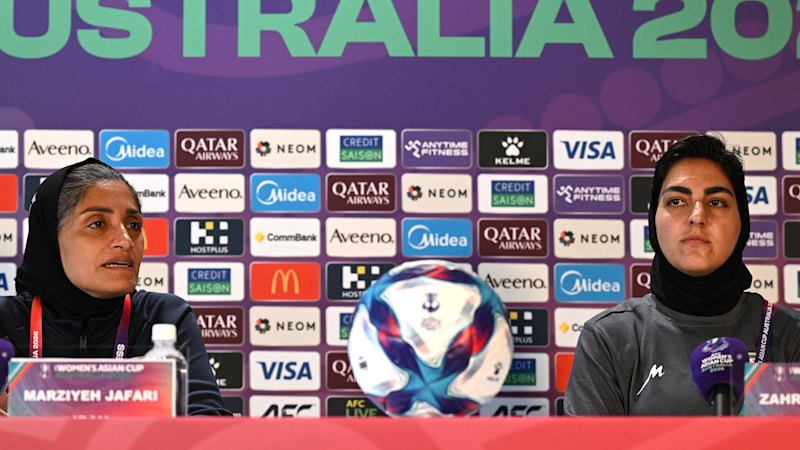
Five members of Iran's women's national football team have broken free from their delegation on the Gold Coast and sought protection with the Australian Federal Police, marking a dramatic escalation in a crisis that began with a simple act of silence.
The situation unfolded when the team, known as the Lionesses, declined to sing their national anthem before their opening Asian Cup match against South Korea on 2 March.An Iranian state television presenter branded them "wartime traitors" who must be "dealt with more severely", setting off alarms across the sporting world.
Look, what happened next tells you everything about the pressure these players were under.Before their subsequent matches against Australia and the Philippines, they sang and saluted, a shift many observers interpreted as coercion rather than choice. Then came Sunday, after the team's final pool match on the Gold Coast.Iranian fans carrying the flag of Iran's pre-Islamic Republic monarchy surrounded the team bus as it left the stadium, chanting "let them go" and banging on the vehicle for 15 minutes before police intervened.
Late Monday night, several players slipped away from their hotel.The five women identified were Fatemeh Pasandideh, Zahra Ghanbari, Zahra Sarbali, Atefeh Ramazanzadeh and Mona Hamoudi.They are now under protection of the Australian Federal Police, and government sources confirmed that Australia's Home Affairs Minister Tony Burke had flown to Brisbane to meet with the women.
The international response has been swift.US President Donald Trump called on Prime Minister Anthony Albanese to grant asylum, warning he would be making a "terrible humanitarian mistake" if the women were forced back to Iran, "where they will most likely be killed".A petition on Change.org urging Australia to protect the team had gathered more than 51,000 signatures by late Sunday.
But here's where it gets complicated, mate.Former Australian soccer captain and human rights advocate Craig Foster noted the players have been denied the opportunity to speak to external support networks, and many may refuse asylum offers due to concerns about family members back home who could face reprisals. That's the real bind these women face: accepting safety in Australia could sign a death warrant for people they love.
This isn't the first time.FIFPRO urged FIFA and the Asian Football Confederation to protect the Iranian team after they were labelled "wartime traitors"; the players had stood in silence when Iran's anthem was played before their opening loss to South Korea, though they sang and saluted before a 4-0 defeat by hosts Australia three days later.
The Australian government, meanwhile, is treading carefully.When asked whether Australia would grant asylum, assistant minister for foreign affairs and trade Matt Thistlethwaite said the government could not "go into individual circumstances for privacy reasons". Foreign Minister Penny Wong has largely stayed silent on the matter.
At the end of the day,according to sports journalist Raha Pourbakhsh, at least seven players left the team hotel with five of those having now applied for asylum with the Australian Federal Police. The question of what happens next sits somewhere between sport, diplomacy, and humanity, with no easy answers in sight.