
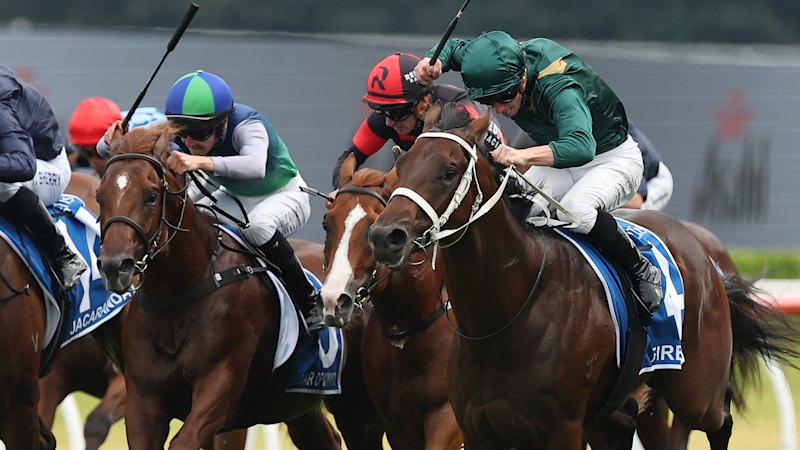
The fundamental question about any headline figure in sport administration is this: what is the number actually measuring, and who benefits? Racing NSW has supplied an impressive answer to the first part with its 2024-25 season accounts, reporting $420.2 million in total returns to owners and participants. Whether the second part is as flattering depends very much on where you sit in the grandstand.
The state's peak thoroughbred body released the figures on Wednesday, drawing on Racing Australia data to show NSW outpacing its nearest rival by $110 million. Chair Dr Saranne Cooke framed the result as proof of a decade of disciplined management. Returns to participants in NSW in 2024-25 reached $420.2 million, $110 million higher than in the nearest jurisdiction, Victoria. The cumulative picture is similarly striking: since 2015-16, total prizemoney for black-type races in NSW has grown from $58.6 million to $130.3 million, a transformation that reflects both strategic investment and a willingness to compete aggressively with Melbourne for marquee racing.
Racing NSW was equally keen to point out that it is the only state allocating 2 per cent of all prizemoney directly to stablehands, the industry's lowest-paid workers, a detail that adds a layer of social equity to what might otherwise read as a headline victory for wealthy owners and well-resourced trainers.
Strip away the talking points and what remains is a genuine record. But the announcement carried a second purpose. Cooke used the release to issue a pointed warning to internal critics, describing "a small minority of agitators" who have "chosen to engage in divisive and personality-driven politics at a time when industry unity and stability are critical." The language is striking, and it does not arrive in a vacuum.
NSW racing has been riven by internal conflict for much of the past two years. The protracted dispute between Racing NSW and the Australian Turf Club over governance and finances escalated to the NSW Supreme Court in late 2025, with Racing NSW having issued a show-cause notice threatening to place the ATC under administration. Against that backdrop, Cooke's reference to "agitators" is less a generic caution than a targeted message to those who have publicly questioned the regulator's conduct.
The counter-argument deserves serious consideration. Industry analysts have pointed out that the raw comparison between NSW and Victorian returns does not account for race volume. NSW runs 25.2 per cent more races than Victoria, or 1,087 more; the average return to participants per race has NSW ahead at $77,728 to Victoria's $71,753. That is still a lead, but a far less dramatic one than the $110 million headline suggests.
There are also structural questions about where within NSW racing the money flows. Research by industry observers has found that just 48 races in NSW offered $1 million or more in prizemoney last season, yet they absorbed $109 million in total. Meanwhile, with more than 69 per cent of horses earning under $50,000, median returns remain stubbornly low, meaning that despite the growth in total prizemoney, most participants are no better off. Record headlines and kitchen-table reality are not always the same thing.
Cooke's warning that internal division "risks harming revenue growth and, ultimately, participant returns" is not without merit as a management principle. Institutional confidence does matter to investors, sponsors, and wagering customers. But accountability and internal scrutiny are not the enemies of industry growth; they are among its preconditions. An organisation that responds to criticism by branding critics as destabilisers forecloses the kind of honest internal debate that tends to catch problems early.
If we accept that the financial trajectory of NSW racing is genuinely impressive (and the data from Racing Australia largely supports that view), then the legitimate follow-up question is whether the governance arrangements that produced that growth are functioning with sufficient transparency. Strong returns and strong accountability are not mutually exclusive. They are, in fact, most durable when they coexist.
History will judge this moment by whether Racing NSW treats its record figures as a mandate for openness or as a shield against scrutiny. For the thousands of owners, trainers, jockeys, and stable staff whose livelihoods depend on the industry's health, the difference matters considerably more than the bragging rights over Victoria.