
When the Victorian government walked away from hosting the 2026 Commonwealth Games in 2023, it triggered a chain of consequences that the sport of swimming is still managing. Glasgow stepped in to rescue the event, but the scaled-back Games, running from 23 July to 2 August with just 10 sports on the programme (down from 19 at Birmingham 2022), arrived with a fresh problem baked into the calendar: a punishing 14-day gap between the end of the swimming competition in Scotland and the start of the Pan Pacific Swimming Championships in Irvine, California.
That gap, tight enough to strain any athlete's recovery and preparation, placed Swimming Australia in a genuine bind. The Pan Pacs, held every four years in the even year between Olympics, serves as the federation's benchmark event for athlete funding decisions. Excelling in Glasgow only to underperform at Pan Pacs a fortnight later risks real financial consequences for swimmers heading into the next competitive year. For a body charged with managing athlete welfare and performance outcomes, sending its full complement of stars to both meets was not a straightforward call.
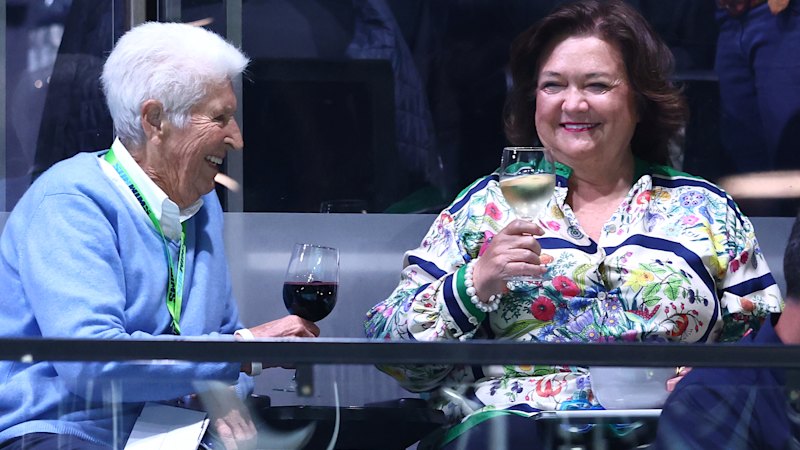
Into that uncertainty stepped Gina Rinehart. According to the Sydney Morning Herald, Australia's richest person, with an estimated net worth of $38 billion according to the AFR's 2025 Rich List, has told members of the Dolphins squad she will again offer cash bonuses for medals won in Glasgow: $20,000 for gold, $15,000 for silver, and $10,000 for bronze. The payments, made directly to athletes rather than through Swimming Australia, continue a pattern of private patronage that has spanned the 2023 World Championships in Fukuoka, the 2025 Worlds in Singapore, and the Paris 2024 Olympics.
The timing matters enormously for Network Seven, which secured the broadcast rights to the 2026 and 2030 Commonwealth Games last April. The network had already absorbed one significant blow: Australia's most sought-after young athlete, sprinter Gout Gout, confirmed he would bypass Glasgow to focus on the World Athletics Under-20 Championships in Oregon. Losing the country's most marketable emerging star from the centrepiece swimming programme is not the headline Seven needed. The broader question of the Games' continuing relevance, with its compressed sport list and questions about competitive depth, adds further pressure on the broadcaster to deliver compelling Australian content.
Seven is privately encouraged by Rinehart's offer, the Herald reports. Olympic gold medallists Mollie O'Callaghan, Kaylee McKeown, Cam McEvoy, and Zac Stubblety-Cook are expected to compete in Glasgow, and Rinehart's bonuses give athletes with already-full programmes additional reason to enter more events rather than conserve energy. Kyle Chalmers, who has close ties to Rinehart, is also expected to race in Glasgow, though he is likely to skip Pan Pacs as his partner Ingeborg Løyning returns to competitive swimming.
There is a legitimate counterpoint to the enthusiasm around private largesse filling gaps left by structural funding shortfalls. Critics have noted that an arrangement where a single billionaire, rather than the sport's governing bodies or government, determines financial incentives for elite athletes introduces questions about accountability and influence. Rinehart previously redirected her support away from Swimming Australia itself, reportedly after disputes over the timing of athlete payments and governance access, leaving the federation with a significant shortfall in sponsorship revenue. The benefits to athletes are tangible and widely appreciated within the sport; the governance questions are equally real.
The broadcast divide adds another layer to an already complicated picture. Nine Network, which owns the Sydney Morning Herald, holds a long-term rights deal with Swimming Australia and the International Olympic Committee that covers the Pan Pacific Championships through to the Brisbane 2032 Olympics. Nine will also televise the Australian trials in Sydney in June, which serve as selection events for both major competitions. It would be against Nine's commercial interests to promote the Commonwealth Games, and the network is understood to privately prefer Australia's biggest names target Pan Pacs. Canadian world number one Summer McIntosh has already confirmed she will skip Glasgow to focus on the American meet, a signal of where the sport's competitive gravity is pulling.
What this situation reveals is the genuine tension at the heart of the Commonwealth Games project in its current form. Glasgow's compact edition has real strengths: the Glasgow 2026 swimming programme is actually the largest ever staged at a Commonwealth Games, with new events including the men's 800m freestyle and women's 1500m freestyle debuting at the Tollcross International Swimming Centre. The competition itself can be excellent. The problem is structural: when a quadrennial championship whose relevance is already under scrutiny falls in the same calendar window as a meet that directly controls athlete funding, the outcome without additional incentives is predictable. Rinehart's bonuses do not resolve that structural tension. They paper over it for one cycle, leaving the harder questions about the Games' long-term value proposition unanswered.