
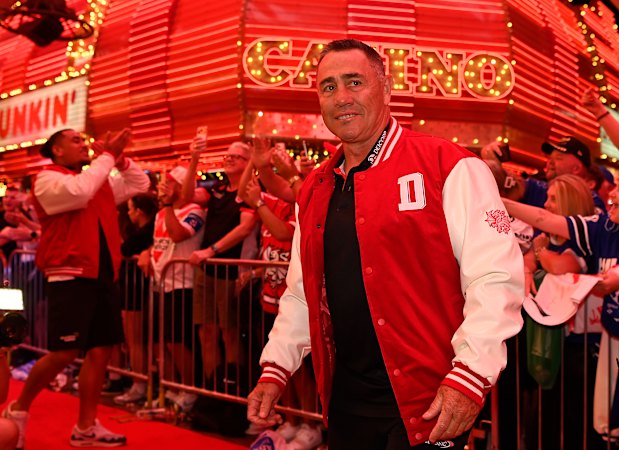
Here's a stat that might surprise you: in the modern NRL era, coaches who set inflated expectations for rebuilding clubs almost never accelerate the rebuild. They tend to accelerate the coach's departure. Shane Flanagan, it seems, has done the arithmetic.
On the eve of the Dragons' round-one clash with Canterbury at Allegiant Stadium in Las Vegas, Flanagan did something rare in professional sport. He told the truth. St George Illawarra, he said plainly, probably won't win the 2026 NRL premiership. The club hasn't played in a grand final in 16 years, and after finishing third from the bottom of the ladder last season, a title charge was never a realistic proposition.
"I'd love to say we're good enough, we're the big dogs to go at it this year," Flanagan said. "We'll win a lot of good footy games this year. But I'm just realistic."
The target Flanagan has set is a return to the finals for the first time since 2018. In the context of where the Dragons have been, that is a meaningful benchmark, not a modest one. Reaching the top eight from their current position would require significant improvement across the roster and genuine cohesion from a group still finding its feet under new staff.
Beyond the scoreboard, the real story is what Flanagan is building toward. The arrival of Kangaroos forward Keaon Koloamatangi from South Sydney Rabbitohs next season, locked in on a five-year, $5 million contract, represents the kind of marquee signing that shifts a club's ceiling. Flanagan indicated two or three further significant signings are planned ahead of 2027, suggesting the club's football department views next year as the genuine launch window.
When you dig into the data on NRL rebuilds, patience tends to be the variable that separates clubs that sustain success from those that cycle through coaches chasing short-term fixes. The Dragons have cycled through coaches. Flanagan, returning to the role after his earlier tenure, appears intent on a different approach this time.
The new halfback combination will be closely watched. Daniel Atkinson, who spent his time at Cronulla as an understudy to Nicho Hynes and Braydon Trindall, steps into the No.7 jersey alongside Flanagan's son Kyle in the halves. The coach was measured in his assessment of Atkinson's readiness, noting the young playmaker hasn't started at halfback for an NRL side for three or four years.
"He's going to grow into that position. We just expect him to do two or three things really well and build his game week-to-week over the year."
Context matters here: halfbacks who are rushed into high-pressure roles without adequate support structures tend to regress, not develop. Flanagan's framing of Atkinson's 2026 as a growth year rather than a make-or-break audition is, analytically speaking, the right call. Whether it translates to wins is a separate question.
The Las Vegas setting added an unusual backdrop to what is, in essence, a club at an early and uncertain stage of its rebuild. The NRL's round-one experiment in the United States brought thousands of Dragons supporters to the Nevada desert, and Flanagan acknowledged the experience carried real value for a young squad, some members of which were too young to enter the casinos.
"I've been around the game for a fair time and I've never seen anything like it," Flanagan said of the Fremont Street fan festival. "For a young 19-year-old football player to experience that is only going to put them in good stead."
Flanagan's public candour about the club's limitations is, in its own way, a form of institutional respect for supporters who have waited long enough to know when they're being sold a story. The Dragons faithful turning up in Las Vegas deserved honesty more than they needed hype. Whether the team repays that honesty with effort and growth across the season is the question 2026 will answer, one week at a time. The St George Illawarra Dragons may not be competing for a premiership this year, but they may, at least, be competing for something more durable: credibility.